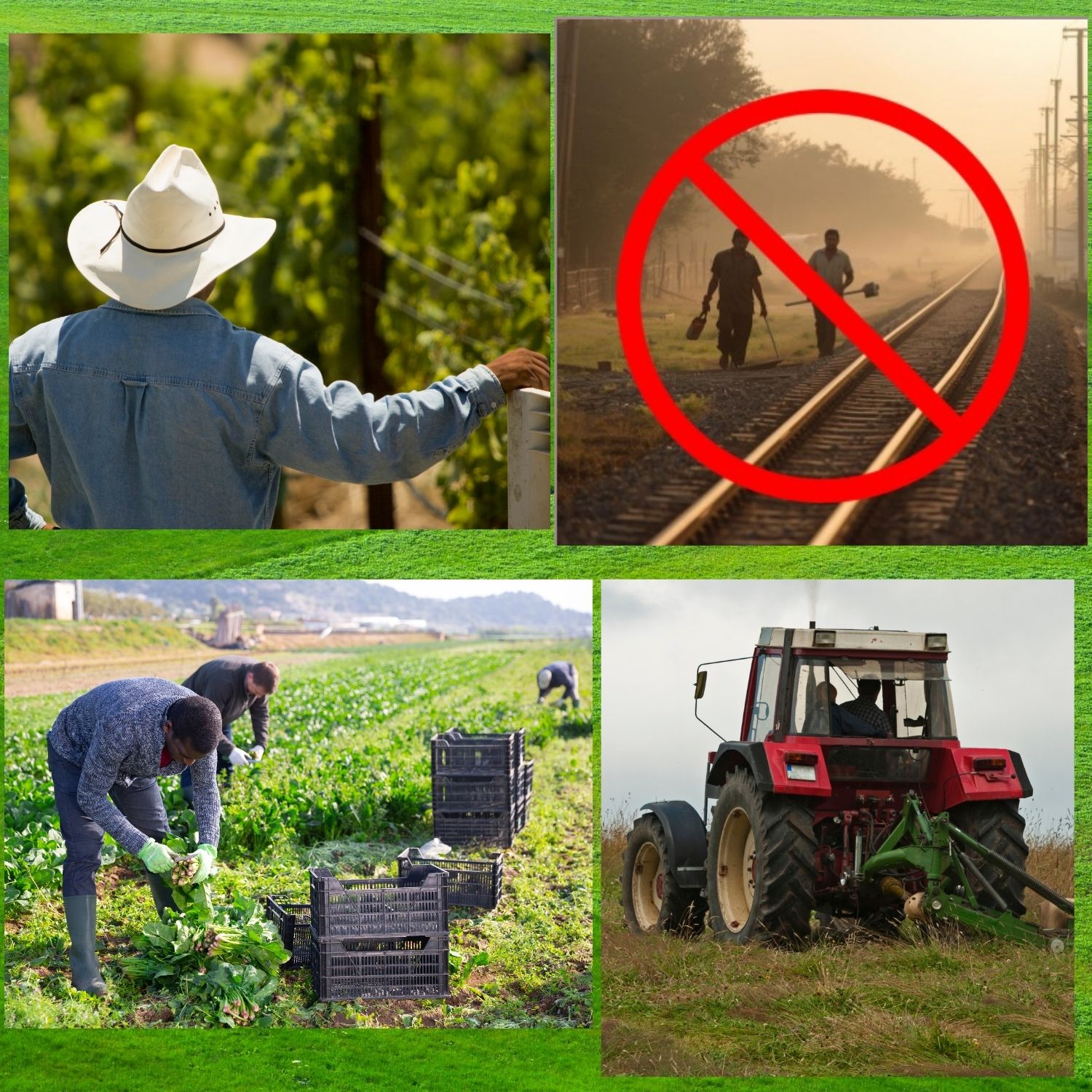
In the agricultural industry, long days and tight timelines are not unusual. Working extended hours around heavy equipment and often near railroad tracks, requires constant awareness that helps prevent life-changing tragedies. Understanding the risks and making safe choices is not optional; it is part of our responsibility.
Crossing and working around railroad tracks safely, whether hauling grain, moving equipment, or pulling a loaded wagon, takes planning, patience, and awareness. In California, which leads the nation in specialty crops, railroad crossings are an everyday reality. It is critical to understand that trains do not follow farm schedules. The consequences of unsafe choices can be devastating, and when it comes to tracks, there is no room for rushing or guessing. Knowing the facts and following the signs, signals, and laws can save lives.
THe bottom line: always expect a train
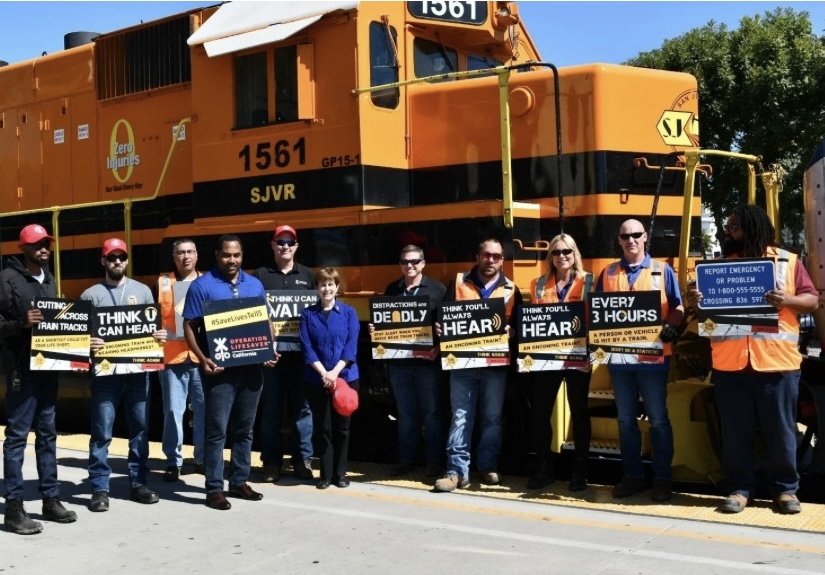
In the United States, every three hours, a person or vehicle is struck by a train. Trains are deceptive – they move faster, quieter, and cannot stop quickly. If you see tracks, assume a train could be coming at any time, on any track, from either direction.
Don't lose your load or your life!
Secure your load: Before approaching, take a moment to check your equipment.
- Check your high pins to ensure they are properly secured and cannot bounce loose.
- Make sure your load is secure so materials cannot dislodge onto train tracks while crossing.
- Confirm that your load is stable and well-balanced.
- Loose materials falling onto the tracks can derail a train or cause a serious collision.
- Avoid tips and spills by making sure that farm machinery wheels are properly lined up with the railroad crossing surface. Stop no closer than 15 feet from the crossing and leave at least 15 feet between the front and rear of your vehicle and the nearest rail.
- Prevent tipping – uneven crossing surfaces can increase the risk of tipping or splling.
- Be aware that liquids or top-heavy grain wagons are prone to tipping.
A few seconds of inspection can prevent a tragedy.
Approach with Caution:
- Slow down early and be prepared to stop.
- Stop at least 15 feet from the tracks.
- Look and list carefully for a train.
- Don’t rely on sound alone – wind, equipment noise, and modern trains can mask horns.
- Open cab windows, turn off radios and fans, and remove headphones.
- Rock slightly in your seat to improve your view around equipment or obstructions.
- Only cross when you are certain it is clear.
- Once you start crossing, do not stop or hesitate.
- Avoid shifting gears to reduce the risk of stalling.
- Never cross when lights are flashing or gates are down – and never try to beat a train.
Don’t Get Trapped
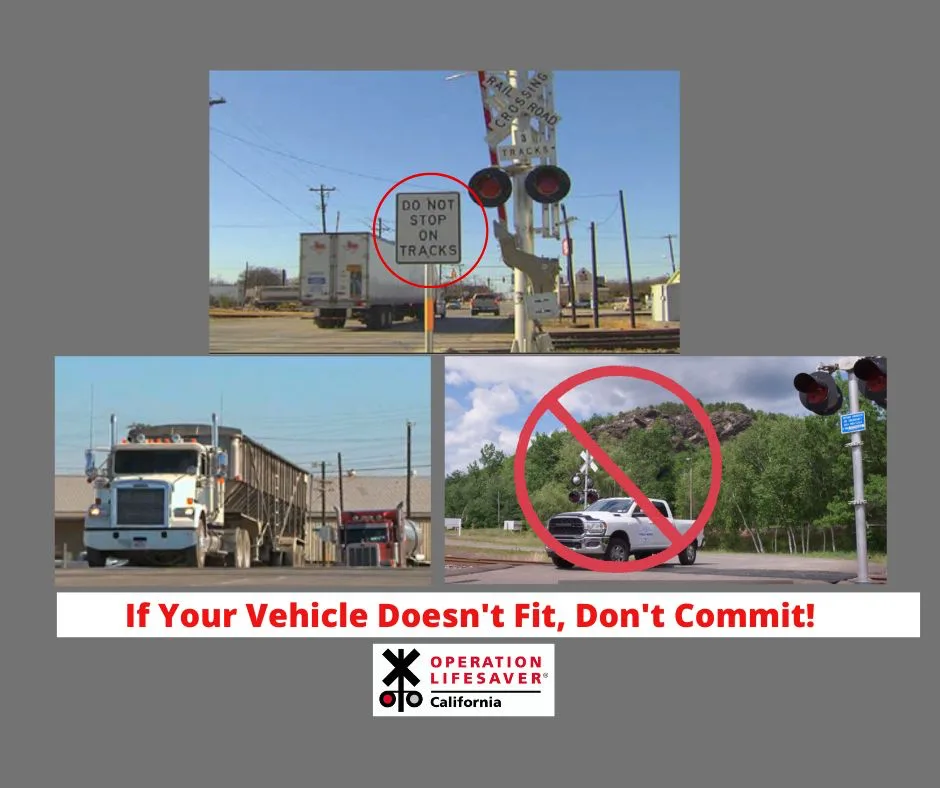
Large equipment needs room. Before crossing, confirm there is adequate space on the other side for your entire vehicle or equipment to be clear of the tracks, so you won’t be forced to stop on the tracks. Remember that trains extend beyond the rails themselves, so leave plenty of clearance – at least 15 feet – from both the front and rear of your vehicle to the nearest rail. Avoid shifting gears while crossing to reduce the risk of stalling.
Remember: If your vehicle does not fit, don’t commit!
What if you get stuck on the tracks?
If your vehicle stalls or becomes stuck on a crossing, act immediately. Seconds matter.
- Get everyone out of the vehicle right away.
- Move far from the tracks and move in the direction the train is approaching.
- Find the blue and white Emergency Notification System sign near the crossing.
- Call the number on the sign and provide the crossing ID so railroad dispatchers know exactly where you are.
- If no sign is visible, call 911.
Do not try to save equipment – lives come first!

Help stop track tragedies
Rail safety is everyone’s responsibility. By slowing down, securing loads, and staying alert, we protect not only ourselves but our families, employees, and rural communities.
- Know the risks.
- Make smart decisions.
- Share rail safety with others.
See Tracks? Think TRAIN®
Stay alert! Rail safety depends on your awareness, patience, and following the signs, signals, and laws every time! No load, deadline, or piece of equipment is worth a life.
Protect yourself. Protect your coworkers. Share these Rail Safety Tips and go home safe at the end of the day
Visit Operation Lifesaver for more agricultural safety tips for farmers and farm machinery operators.
Don’t miss Rail Safety for the Agricultural Community: Stay Off! Stay Away! Stay Safe! coming soon in February!